
Concrete Contractors in Chandler, AZ
Chandler grew quickly through the 1990s and 2000s, and the concrete reflects it. Most of what we see here was poured within the last thirty years, which changes the conversation — less about failing slabs, more about outdoor space that was never finished the way the owner actually wanted it.
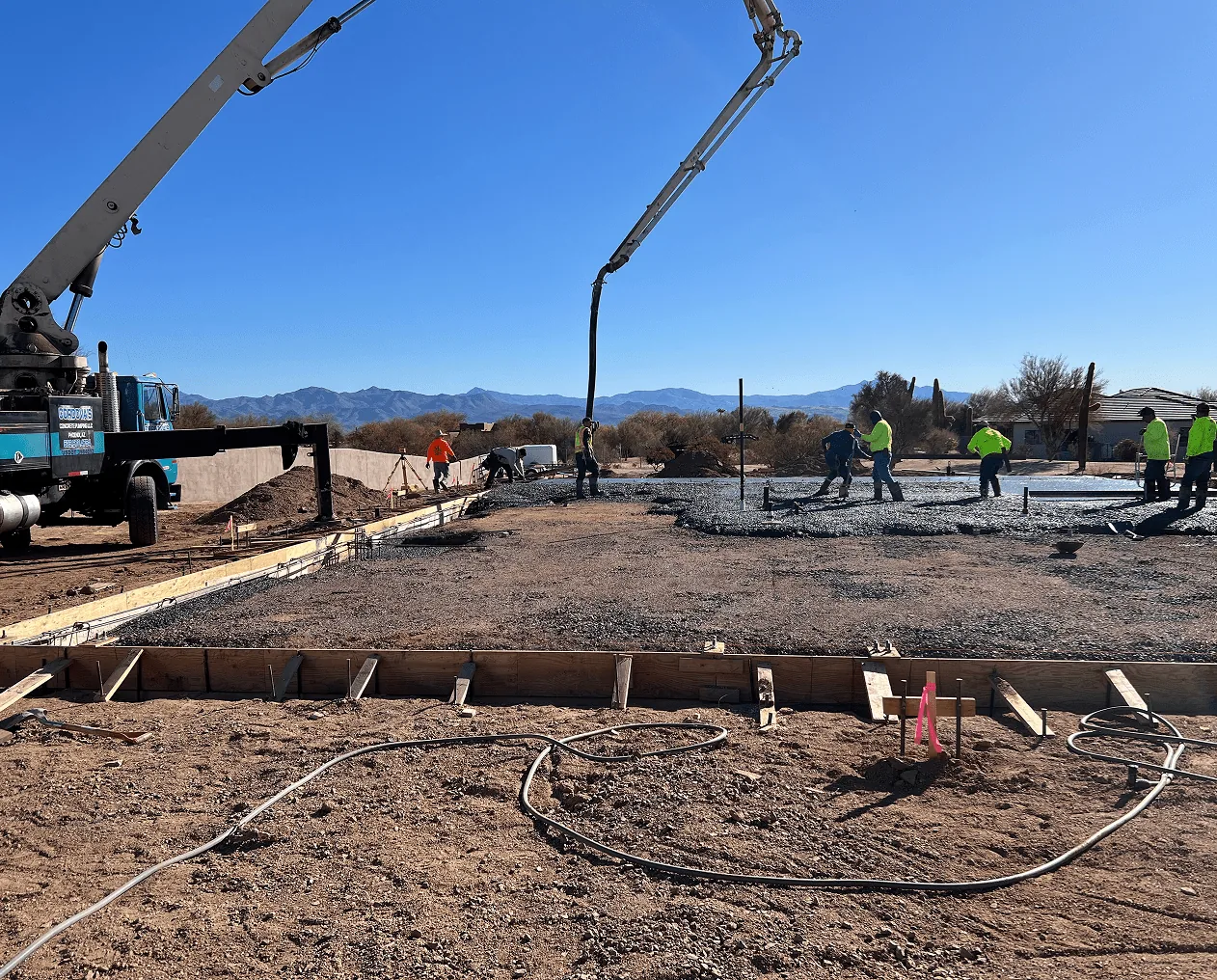
Finishing What the Builder Left Undone
Production builders pour what the plan calls for. In much of Chandler that meant a modest rear patio, a standard driveway and not much else. Ten or twenty years on, the most common request we get here is expansion: pushing a patio out to something a table and chairs actually fit on, running a path along the side yard, adding a pad for a grill island or a shade structure.
The technical part of that job is the seam. New concrete placed against old concrete has to be tied in at the right elevation with the joint placed where it will not telegraph a crack, and the two surfaces have to drain as one. Done carelessly it looks like an addition forever. Done properly it reads as though the patio was always that size.
Ocotillo, Fulton Ranch and the Lake Communities
South Chandler has a distinct character — Ocotillo and Fulton Ranch are built around water features and golf, with a lot of properties where the outdoor space is genuinely the point. Concrete work there tends to be more considered: decorative finishes, larger pool decks, surfaces that have to look deliberate from inside the house as well as outside it.
Those neighborhoods also commonly sit under HOA design guidelines, so finish and color choices may need approval before work begins. Worth checking early.
Commercial Work Along the Price Corridor
Chandler's employment corridor along the Price Freeway means we do a fair amount of non-residential work in the city — approach slabs, walkways, equipment pads, loading and service areas, and repairs to surfaces that see constant vehicle traffic.
Commercial flatwork carries different constraints from a backyard patio. Access and scheduling usually matter as much as the pour itself, because the business needs to keep operating. Where that is the case we will phase the work and be specific about when a surface can carry foot traffic and when it can carry vehicles.
Pouring in Chandler's Summer
Concrete placed in extreme heat behaves differently. When air temperatures run well past 100°F, water leaves the mix faster than it should, the surface can set before the slab beneath it is ready, and you get plastic shrinkage cracking that no amount of finishing skill will fix afterwards.
The answer is not complicated, but it does have to be followed: pour early in the day, keep the mix and the subgrade under control, and cure the slab properly once it is down rather than walking away from it. One genuine advantage of building here is that we have no freeze-thaw cycle to design against — the damage pattern that wrecks concrete in cold climates simply is not a factor in the Valley.
Concrete Services We Offer in Chandler
Every service below is available throughout Chandler and the surrounding East Valley. If you are not sure which one your project falls under, describe it and we will point you in the right direction.
Areas of Chandler We Cover
We work across Chandler and the neighbouring communities, including:
- Ocotillo
- Fulton Ranch
- Downtown Chandler
- Price Corridor
- Andersen Springs
- Sun Groves
- South Chandler
- West Chandler
Common Questions from Chandler Homeowners
Can you match new concrete to my existing patio?
We can get close, and we will be straight with you about how close. Concrete cures to its own shade and existing slabs have weathered, so a seamless match on colour is rarely realistic. Often the better answer is a deliberate joint and a complementary finish.
Do you take commercial jobs in Chandler?
Yes. We handle approach slabs, walkways, equipment pads and service areas, and we can phase work around your operating hours where access is tight.
Is summer a bad time to pour concrete in Chandler?
It is not off-limits, but it has to be managed — early placement and proper curing matter far more in July than in February. We would rather schedule sensibly than pour a slab in bad conditions.
Get a Free Concrete Quote in Chandler
Tell us what you are planning and we will give you a straight answer on what it involves and what it will cost. No charge for the estimate.